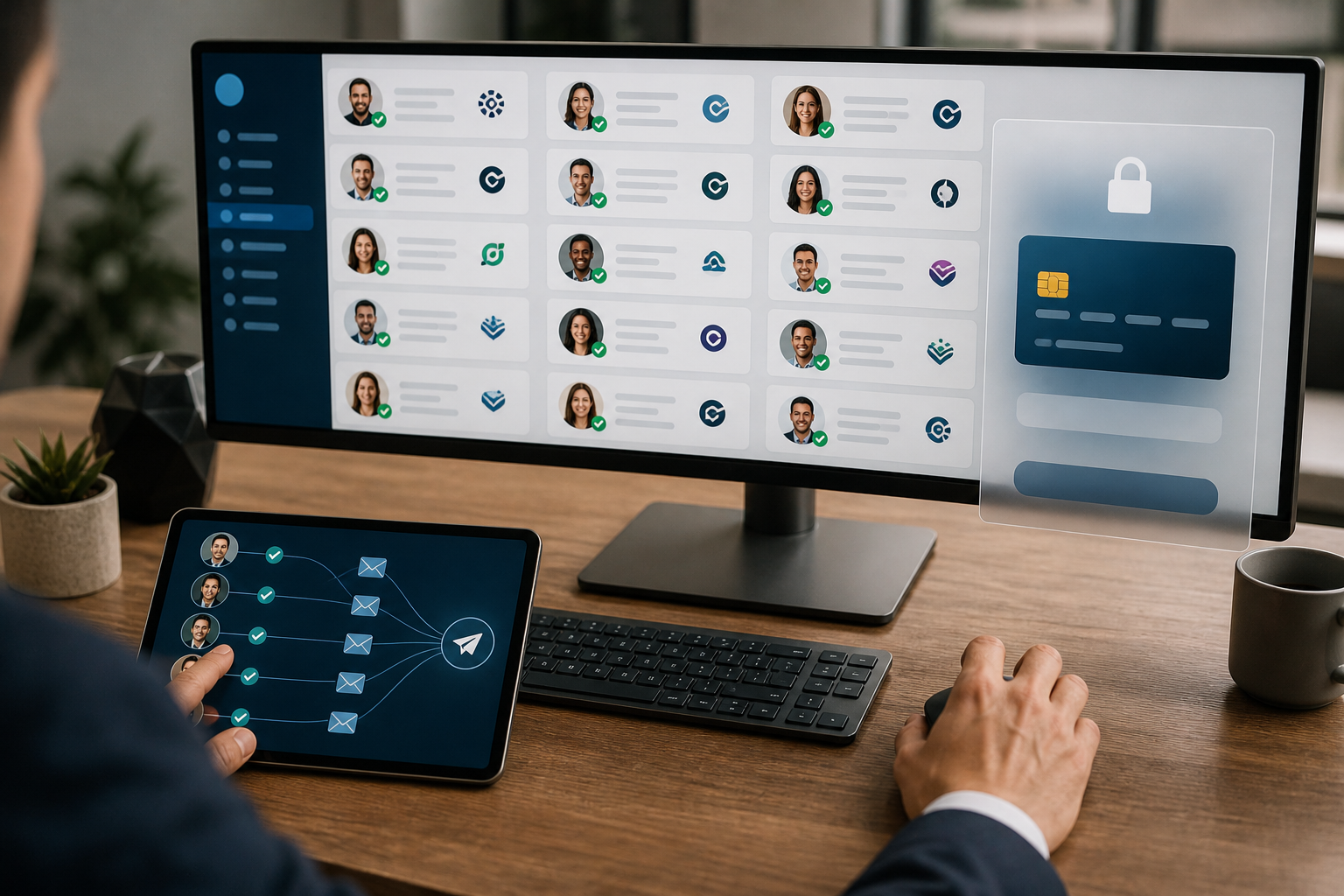
Most business owners treat prospect lists as a checkbox, then wonder why outreach stalls and conversion costs climb. The truth is that high-quality B2B prospect data research separates guesswork from predictable sales. If you rely on shaky lists, outdated contacts, or one-size-fits-all outreach, every peso you spend on marketing and sales leaks away. A focused approach to prospect data research makes each call, email, and meeting materially more likely to lead to revenue.
This article explains how managers and owners in the Philippines can run practical, compliant, and cost-effective B2B prospect data research. You will find a clear workflow, the exact data points that matter, local sources and verification techniques, budgeting guidance in pesos, and outreach patterns that respect privacy rules while improving response rates. Read this with your current CRM open and one real campaign in mind, and you will leave with actions you can implement this week.
Why precise B2B prospect data research matters for Philippine firms
Many small and mid-sized Philippine companies still rely on intuition and a handful of referrals for business development. That works for a while, but it limits scale and inflates customer acquisition costs. Accurate prospect data shortens sales cycles and improves forecasting in three tangible ways.
First, better targeting reduces wasted outreach. When you know which department owns procurement, and who signs purchase orders, every call reaches someone who can move the deal. Second, better data improves message relevance. A prospect in a Cebu manufacturing firm has different pain points than a Manila-based distributor, and tailored messaging raises reply rates. Third, clean data reduces operational waste. Fewer bounced emails, fewer wrong numbers, and fewer duplicate records keep your CRM reliable and your sales team focused.
For a Manila-based SaaS selling inventory software, for example, identifying 100 firms in CALABARZON with 50 to 200 employees and a finance manager title can produce a much higher demo-to-deal ratio than blasting 1,000 generic email addresses. That precision matters when each sales meeting costs time and travel, and when your sales team is small.
Define your ideal customer profile before collecting data
Research without a clear target becomes noisy and expensive. Start by defining an ideal customer profile, or ICP, that reflects where you will focus resources this quarter.
An ICP should include industry, company size (employees or revenue), geography, purchase authority, and triggers that indicate buying readiness. For example, an ICP for a logistics software startup might be: private logistics firms in Metro Manila and CALABARZON, 20 to 150 employees, annual logistics spend over ₱5 million, and recently expanded into e-commerce fulfillment. That combination helps you filter out irrelevant leads and prioritize prospects that match your product-market fit.
Translate the ICP into specific, collectible data fields. These are the core elements your prospect data research must capture.
Core data fields to collect and why each matters
Collecting the right data points focuses outreach and simplifies qualification. Prioritize completeness and accuracy over sheer volume.
Company-level details: legal name, business address, industry classification, year established, estimated revenue or employee count, ownership type, and corporate registration number. These fields let you verify legitimacy and identify procurement capacity.
Decision-maker details: name, current title, role description, direct phone number, company email, LinkedIn profile, and preferred contact channel when available. Reaching the right person speeds qualification.
Operational signals: purchasing cycle length, typical procurement budget, current vendors or technology stack, and recent news such as expansions, management changes, or grant awards. Operational signals reveal readiness to buy.
Contextual data: financial risk indicators, public tender participation, membership in trade associations, and attendance at industry events. Context can be the difference between immediate outreach and nurturing.
Engagement history: previous interactions, past proposals, and any inbound interest captured from marketing. This prevents redundant outreach and helps personalize follow-ups.
Collecting these fields creates a prospect profile that supports a confident first contact. You do not need every field for every prospect, but missing decision-maker contact information is a common cause of wasted effort.
Where Philippine B2B prospect data lives, and how to extract it
Not all sources are equal. Some provide legal and operational records, others offer human-verified contacts. Use a mix and cross-verify.
Public registries and government sources. The Securities and Exchange Commission provides corporate registration details for companies registered in the Philippines. The Department of Trade and Industry and the Philippine Statistics Authority publish industry and economic data useful for sector targeting. These sources are free and authoritative for company-level verification.
Local chambers, industry associations, and trade shows. Chambers of commerce in Manila, Cebu, Davao, and regional industry associations maintain member directories and event attendee lists. These often include contact persons and can identify firms open to networking and partnerships. Attending trade shows or sponsoring a local session can also generate high-quality leads and immediate consent to contact.
Professional networks and job sites. LinkedIn remains indispensable for identifying decision-makers and their career context. JobStreet and Kalibrr offer company pages that signal hiring activity, a helpful indicator of growth and purchase intent.
Company websites and procurement portals. Many firms publish procurement contacts or bid notices. For manufacturers, supplier portals and tender announcements are gold because they reveal active procurement cycles.
Paid data providers and enrichment tools. Platforms such as Clearbit and ZoomInfo provide bulk contact data and enrichment, often integrating with CRMs. Using these can speed up research. Expect higher fees for comprehensive coverage, and always validate a sample before buying a large dataset.
Local data brokers and research firms. Several Manila-based market research firms and list brokers compile Philippine-specific B2B lists. They can save time and improve relevance, particularly for industry niches such as agribusiness or healthcare.
Practical verification and enrichment techniques
Raw lists often contain outdated or incorrect contacts. Verification reduces bounce rates and improves phone success.
Start with email verification. Use email verification tools to remove invalid addresses and flag catch-all domains. Follow with manual checks for high-value prospects, confirming the email structure against company website conventions.
Validate phone numbers using a combination of automated dialers for bulk checks and live calls for high-priority contacts. When calling, use a brief script to confirm the prospect’s role and willingness to receive further information.
Cross-reference LinkedIn profiles. A current title and recent activity often confirm contact accuracy. If a person’s LinkedIn matches the company site and public filings, you have higher confidence.
Enrich profiles selectively. For deals likely to close in the next quarter, add procurement budgets, existing vendor names, and organizational charts. For long-term nurture targets, basic company and decision-maker details suffice.
Log all verification steps in your CRM. Note the source and verification date for each field, so your team can judge data freshness and apply periodic rechecks.
Budgeting prospect data research for Philippine SMEs
Small and medium enterprises in the Philippines must balance cost and quality. You do not need an enterprise budget to run effective research.
If you rely on internal resources, plan for staff time. A junior researcher can find and verify 30 to 80 prospects per week depending on complexity. At a conservative salary of ₱20,000 to ₱30,000 per month for a part-time researcher, that can be highly cost-effective.
Paid tools accelerate work but have costs. Local market lists or curated datasets may charge from a few thousand pesos for a small list to tens of thousands for larger, targeted datasets. International enrichment services usually charge a subscription or per-record fee. A sensible approach is to trial a provider with a small spend, verify the accuracy, and then scale.
Remember to budget for CRM capabilities, even a low-cost Philippine-hosted CRM or a cloud option that supports custom fields, tagging, and activity logging. Investing ₱5,000 to ₱15,000 a month in tools and a researcher often yields lower customer acquisition costs than unfocused outreach.
Complying with Philippine privacy and communication rules
Collecting and using prospect data requires care. The Philippines’ Data Privacy Act and the National Privacy Commission govern the processing of personal data. Personal data includes names, phone numbers, and email addresses tied to individuals.
Obtain and record legitimate bases for processing personal data. For marketing emails, it is best practice to secure consent when required, and to include clear opt-out instructions. For B2B communications, the lawful basis may be legitimate interest for direct marketing, but you should document the assessment and keep records of any objections.
Avoid sending unsolicited bulk SMS without a consent mechanism. Telemarketing and electronic communications have regulatory attention, so maintain opt-out lists and honor unsubscribe requests promptly.
When buying third-party lists, insist on a data provenance statement. Ask the vendor how they collected the data and whether subjects had given consent for marketing. Keep contracts that allocate responsibility for data breaches and inaccuracies.
Practical outreach sequences and measurement
Better prospect data improves every part of the outreach sequence. A simple, effective cadence for B2B in the Philippines might run like this: a personalized email that references a local context or trigger; a follow-up email four to seven days later with a specific value proposition and proposed time; a single phone call a few days after the follow-up; a LinkedIn connection with a brief message if the phone call did not connect; a final short email two to three weeks after the first touch offering to share a case study.
Personalization raises replies. Reference a local office, recent news, or a regulatory change relevant to the prospect. For instance, when reaching out to a Cebu-based logistics manager, mention maritime port congestion patterns or local shipping costs that affect inventory velocity.
Track the right metrics. Measure response rate, meeting rate, and conversion from meeting to deal. Also track data-level metrics such as bounce rate, incorrect phone percentage, and time-to-verify. These help you balance investment in data research against campaign outcomes.
Example scenario: targeting manufacturing firms in CALABARZON
Imagine you sell a maintenance management solution and want 30 qualified meetings in three months with manufacturers in CALABARZON. Define the ICP: 50 to 300 employees, manufacturing of consumer goods or basic metals, maintenance manager or plant manager title, and recent capital expenditure announcements.
Start by pulling corporate registration data from the SEC, then cross-reference member lists from regional manufacturing associations. Use LinkedIn to identify decision-makers and job postings to confirm growth signs. Verify emails and phone numbers, then prioritize prospects showing procurement activity. With a focused list of 200 prospects and a tailored outreach cadence, you can expect a higher meeting rate and a clear pipeline to reach the goal.
Common pitfalls and how to avoid them
The biggest mistakes are poor definition of target, neglecting verification, and ignoring privacy obligations. Avoid assembling massive lists without filters. Do not send the same generic message to every contact. And never assume third-party vendors are compliant; always verify provenance and retain contractual protections.
A second trap is letting poor data degrade the CRM. Stale records lead sales teams to distrust the database, and they revert to ad hoc prospecting. Schedule regular hygiene, set ownership for records, and require brief verification notes on every new lead.
Final steps to get started this week
Begin by writing a one-paragraph ICP for your next campaign. Identify three high-value data fields you will verify for every prospect. Run a small pilot with 50 prospects using a mix of public registries, LinkedIn, and one paid enrichment source. Track the response and validation rates, then decide whether to scale in-house research or purchase more data.
If you follow a deliberate process of defining ICP, sourcing mixed-quality data, verifying selectively, and respecting local privacy rules, your B2B prospect data research will stop being a cost center and become a predictable engine for sales.
A short closing
Reliable prospect data is practical, not mystical. For Philippine businesses, the right mix of local public records, industry networks, manual verification, and prudent use of paid tools will lower acquisition costs and shorten sales cycles. Start small, measure precisely, and grow the process into a repeatable advantage for your team.